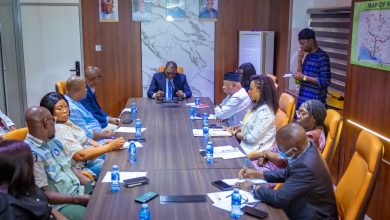
President Bola Tinubu.
By Ibrahim Nasiru
In my recent essay, “Moses in the Desert: The Limits of Scriptural Metaphors in Nigeria’s Subsidy Debate,” I argued that the current administration’s economic policies are forcing Nigerians into a grueling, directionless wilderness under the guise of a “necessary desert crossing.” While defenders of these policies frame our current suffering as the birth pangs of a new economy, a brilliant historical analysis recently forwarded to our platform by Rabi’u Garba Sufyan titled “Structural Adjustment Programme (SAP) – 1986: The Medicine That Tasted Bitter” provides the exact missing piece of the puzzle.
Sufyan’s breakdown of the 1986 Structural Adjustment Programme (SAP) does more than just educate us on economic history; it shatters the illusion that the policies of 2026 are innovative, bold, or unprecedented. Instead, it reveals a chilling, cyclical reality: Nigeria has been wandering in this exact same economic desert for forty years.
In scriptural history, forty years is the precise duration the Israelites were condemned to wander in the wilderness due to a lack of clear, compassionate leadership and structural direction. It is a stunning, tragic coincidence that exactly forty years after General Ibrahim Babangida rolled out SAP in June 1986, the Nigerian populace in 2026 is being handed the exact same prescription by President Bola Ahmed Tinubu’s administration—and we are being told to expect a different result.
The Recycled Playbook
Look closely at the mirror Sufyan holds up to our past. The core pillars of SAP in 1986 are identical to the policy directives of today:
* The Currency Illusion: In September 1986, the introduction of the Second-tier Foreign Exchange Market (SFEM) devalued the Naira from 90 kobo to ₦4, and eventually ₦20, searching for an elusive “true value.” In 2024–2026, the complete floating of the Naira has mirrored this exact chaos, decimating purchasing power and throwing the business community into a tailspin.
* The Subsidy Vacuum: Just as SAP dismantled petroleum and agricultural subsidies in 1986, the current administration abruptly stripped away the fuel subsidy cushion without establishing functional domestic refining capacity or mass transit alternatives first.
* The Palliative Band-Aid: In the late 1980s, realizing the medicine was too bitter, the military regime scrambled to create relief programmes like the Peoples Bank and the National Directorate of Employment (NDE). Today, we see the same panic-driven distribution of temporary palliatives, cash transfers, and “fuel discount mechanisms” that do nothing to cure the underlying inflationary disease.
From “Andrew Checking Out” to the “Japa” Wave
The human cost of repeating this failed experiment is devastatingly consistent. Sufyan reminds us that the skyrocketing inflation of the SAP era gave birth to Nigeria’s first massive wave of institutional brain drain—immortalised by the famous television character “Andrew,” who announced he was “checking out” of the country due to unbearable living conditions.
Fast forward forty years to 2026, and the unchecked devaluation of the Naira and a petrol price spiraling past ₦1,400–₦1,500 per litre have triggered the exact same symptom, now modernised as the “Japa” wave. We are losing our finest doctors, tech talents, academics, and youth to the exact same structural violence that drove away their parents’ generation in 1986.
The Fundamental Lessons We Refuse to Learn
Sufyan closes his analysis with two profound lessons that should be pinned to the desk of every policymaker in Abuja today.
First, you cannot leave everything to market forces when the market itself is broken. Swapping a state-run monopoly for an unregulated, volatile oligopoly does not create a free market; it simply creates a corporate playground where the poor are exploited.
 President Bola Tinubu.
Second, devaluation alone does not make an economy productive; you must produce before you devalue.Floating a currency when your factories lack electricity, your farmers are displaced by insecurity, and your local refining capacity cannot meet domestic demand is not economic theory—it is economic suicide.
Conclusion: The Disease is Not the Cure
If a medical treatment has been administered to a patient for forty years and the patient remains chronically ill, malnourished, and in pain, a responsible doctor does not tell the patient to “endure a higher dosage.” A responsible doctor admits the treatment has failed.
The defenders of the current economic order ask us to have blind faith in the desert journey, but history shows that our leaders have lost the map. We cannot build a sustainable Canaan on the bones of an impoverished populace.
It is time to retire the failed ghost of 1986 and demand an economic model that prioritizes domestic productivity, rigorous accountability, and human dignity.
For advertisement and more information please contact us on 08027590195, 08035721540 or email us at greatalternativenigltd@gmail.com, diliutomi1@gmail.com or send us messages on x @dn_utomi, on Facebook or on Instagram @utomidili