IMION ADVISES NPERA ON EFFECTIVE REGULATORY ACTIONS AND TRADE FACILITATION
.....Warns Against Excessive Friction

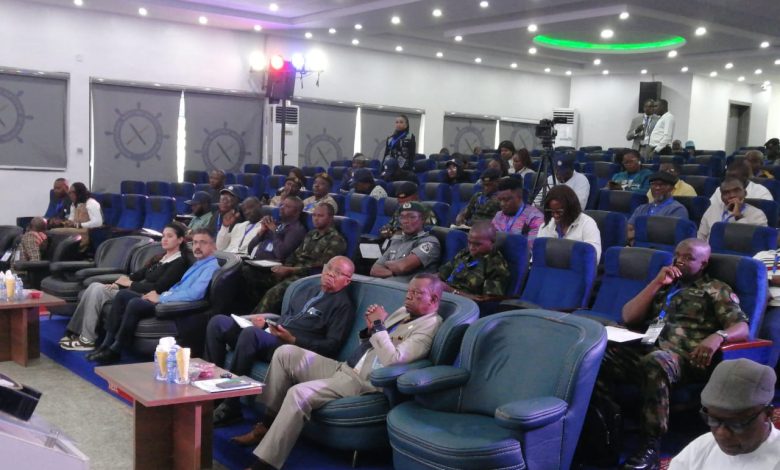

Trade and logistics experts have called on the Nigerian Ports Economic Regulatory Agency (NPERA) to implement a port single window with ecosystem visibility that encompasses all trade nodes to ensure effective regulatory control and efficient trade facilitation for the port sector.
Speaking in Lagos on trade facilitation during the International Maritime Institute of Nigeria (IMION) executive course on “Logistics and Trade Facilitation for Blue Economy Growth,” the Director-General of the African Centre for Supply Chain Management, Dr. Obiora Madu, stressed the need to connect the trader, single window, regulators, customs, port community, terminal, transport and market into a continuous flow.
Madu noted that every regulatory agency at the port may have a legitimate mandate, “but collectively, they can create duplication, conflicting requirements, repeated inspections, multiple data requests, and unclear accountability.” He warned that “excessive friction brings delay, and higher cost of doing business.”
Therefore, he urged NPERA to demand clarity if it finds conflicting mandates, stating that good mandates can produce bad outcomes when poorly coordinated. He emphasised that the trade process should rather be one data submission, one inspection (where appropriate), payment process, decision trail, and accountability framework.
According to him, the multi-agency control challenge leads to undue duplication and unclear accountability, among others. Against this background, he said the government should create a proper Key Performance Index (KPI) for its agencies and traders, where the customer’s experience should be the ultimate system.
Consequently, he called for trade simplification in terms of documentation, predictability, transparency, digitisation, and release procedures. According to him, the question should be whether a business implementation has actually reduced the cost and time of trading.
Madu explained that businesses need to know what is required, who requires it, how much it costs, how long it should take, what happens if requirements change, and where a decision can be challenged.
Moreover, he stated that modern inspection should increasingly use technology, intelligence and risk management, with benefits including faster inspection, better security, reduced fiscal handling, greater transparency and better targeting.
According to him, “technology should reduce friction, not digitise bureaucracy,” and should improve, rather than create more bureaucracy along the line.
He argued that “more control has always meant more friction,” while excessive friction brings delay, more cost, and opportunity for corruption, while modern trade facilitation seeks better control, not less control.
This, he noted, is contrary to the traditional approach, which thinks that more control equals more security; more documents mean more control; more inspections equal more assurance; and more agencies mean more oversight.
In the meantime, Madu described compliance as a major part of trade facilitation, stating that non-compliant trade documentation is a clog on trade facilitation.
Meanwhile, he explained that a port can be modern, a road excellent, a rail (network) available and a vessel ready, but if trade procedures are slow, fragmented, and unpredictable, value is still lost because “infrastructure moves goods, but trade facilitation moves trade.”
On the imperative of trade facilitation, he said it is “fundamentally about making legitimate trade faster, cheaper, simpler, more predictable and more transparent” without compromising set rules.
One challenge with the public sector in Nigeria is a lack of collaboration, he added, and technology has made risk control easier, while trade friction causes delays through documentation challenges, inspection, uncertainty, multiple agencies, informal costs, higher cost of doing business.
Trade facilitation means smarter control, not less control, and that it enables the ease of business, increases activities, growth, lower transaction costs, faster trade, leads to better cash flow, more competitive business, more trade and investment, and finally economic growth.
Also speaking on the topic, “Sustainability and Risk Management in Blue Economy Logistics,” the Executive Director, Africa Green Economy and Sustainability Initiative, Dr Eugene Itua, said sustainability and risk management are central to ensuring that these activities balance economic efficiency, environmental protection and social equity.
For advertisement and more information please contact us on 08027590195, 08035721540 or email us at greatalternativenigltd@gmail.com, diliutomi1@gmail.com or send us messages on x @dn_utomi or on Instagram @utomidili.