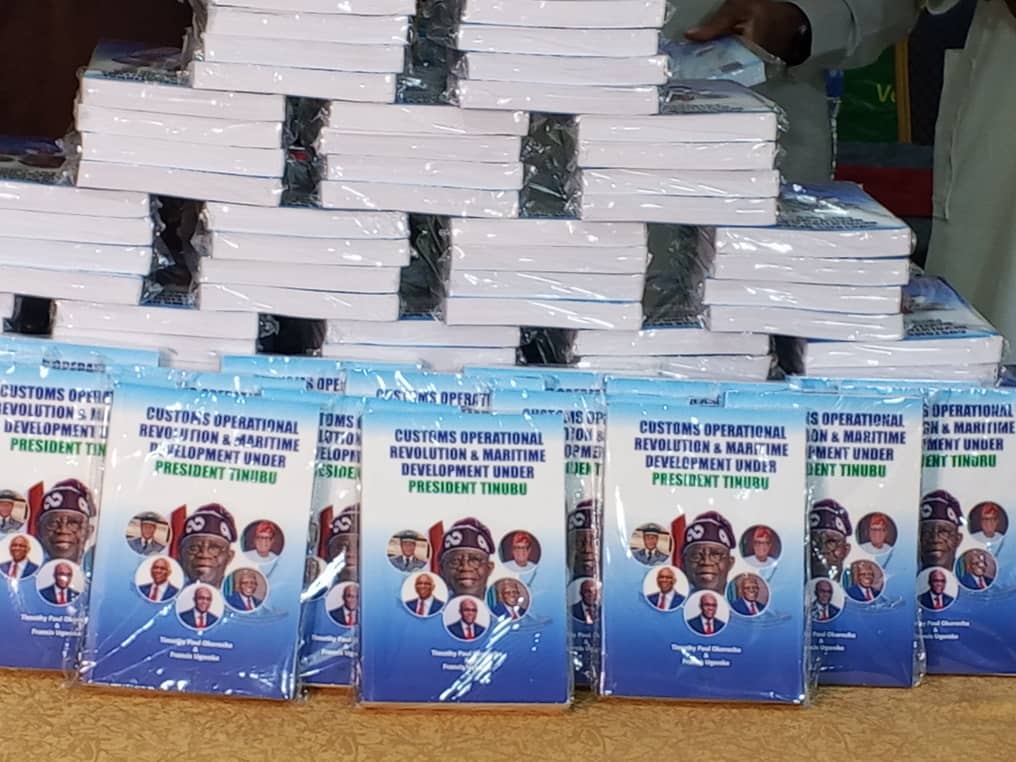
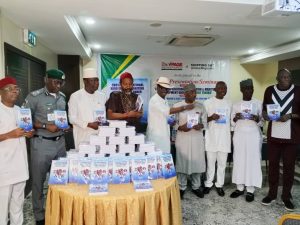

The Nigeria Customs Service has reaffirmed its pivotal role in national economic development, with Comptroller-General Bashir Adewale Adeniyi declaring that reforms within the Service have strengthened trade facilitation, revenue generation and maritime governance.
Represented by Comptroller C.C. Nwokorie at the launch of the book “Customs Operational Revolution & Maritime Development Under President Tinubu”, Adeniyi praised the authors, Chief Timothy Okorocha and Mr. Francis Ugwoke, for their commitment to documenting vital institutional milestones.
Speaking further, the Customs Service boss said: “The remarkable revenue growth and anti-smuggling successes recorded by the Nigeria Customs Service under CGC Bashir Adewale Adeniyi can largely be attributed to visionary leadership, technology-driven reforms, intelligence-led enforcement, stakeholder engagement, and stronger inter-agency collaboration. Nothing gives energy to strategy like synergy.”
In his welcome address, co-author Chief Timothy Okorocha explaining the motivation behind the book said: “Today is not merely about launching a book. It is also about reflection, documentation, and thoughtful engagement with a sector that remains central to Nigeria’s economic aspirations.” He emphasised that the work situates Customs reforms within the wider maritime ecosystem, examining the roles of agencies such as NIMASA, NPA, NSC, CRFFN, NIWA, and the Maritime Academy of Nigeria.
Cerebral Customs chief, DCG Dera Nnadi (Rtd), who reviewed the book described the work as “rich in industry content context, and a veritable reference material for scholarly engagement,” recommending it as a useful companion for customs personnel and stakeholders across the maritime sector. He emphasised that the book goes beyond reportage, documenting milestones and policy initiatives that have significantly shaped the industry in the past three years.
“The book highlights the symbolic and transformative leadership of Comptroller-General Bashir Adewale Adeniyi, emphasising reforms in meritocracy, human capital development, staff welfare, and stakeholder engagement. It underscores digital transformation as a strategic necessity, linking Customs modernisation to maritime efficiency, port competitiveness, and Nigeria’s positioning in AfCFTA.
“While celebratory in tone, the authors also invite critical reflection, noting persistent challenges such as port congestion, logistics inefficiencies, and infrastructure deficits. Ultimately, the book stands as both documentation and debate material — a reminder that Customs reform is central to Nigeria’s economic future.”
The seminar, themed “Three Years After Marine and Blue Economy Ministry: How Far, How Well?”, invited reflection on Nigeria’s progress in harnessing maritime resources. Adeniyi described the creation of the Ministry of Marine and Blue Economy as a strategic decision by President Tinubu, aimed at unlocking Nigeria’s maritime potential for economic diversification, job creation, and sustainable development.
The Lagos launch was hailed not only as a literary milestone but also as a call to action for sustained documentation, dialogue, and collaboration. As Adeniyi reaffirmed: “The Nigeria Customs Service remains committed to securing our borders, facilitating trade, and supporting government initiatives aimed at promoting sustainable economic growth.”
For advertisement and more information, please contact us 08027590195, 08035721540 or email us at greatalternativenigltd@gmail.com, diliutomi1@gmail.com. or send us messages on x @dn_utomi or on Instagram @utomidili
.