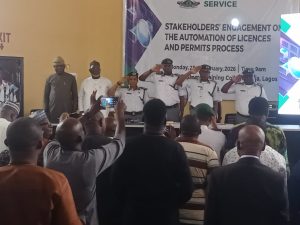
 The ACG and his lieutenants saluting the national anthem at the event.
Story by Dili Utomi
In continuation of the third leg of the three point agenda of Consolidation Collaboration and Innovation of the Comptroller-General of Customs, the Nigeria Customs Service is ready to migrate to a paperless, automated, more effective channel of processing Licenses and Permits.
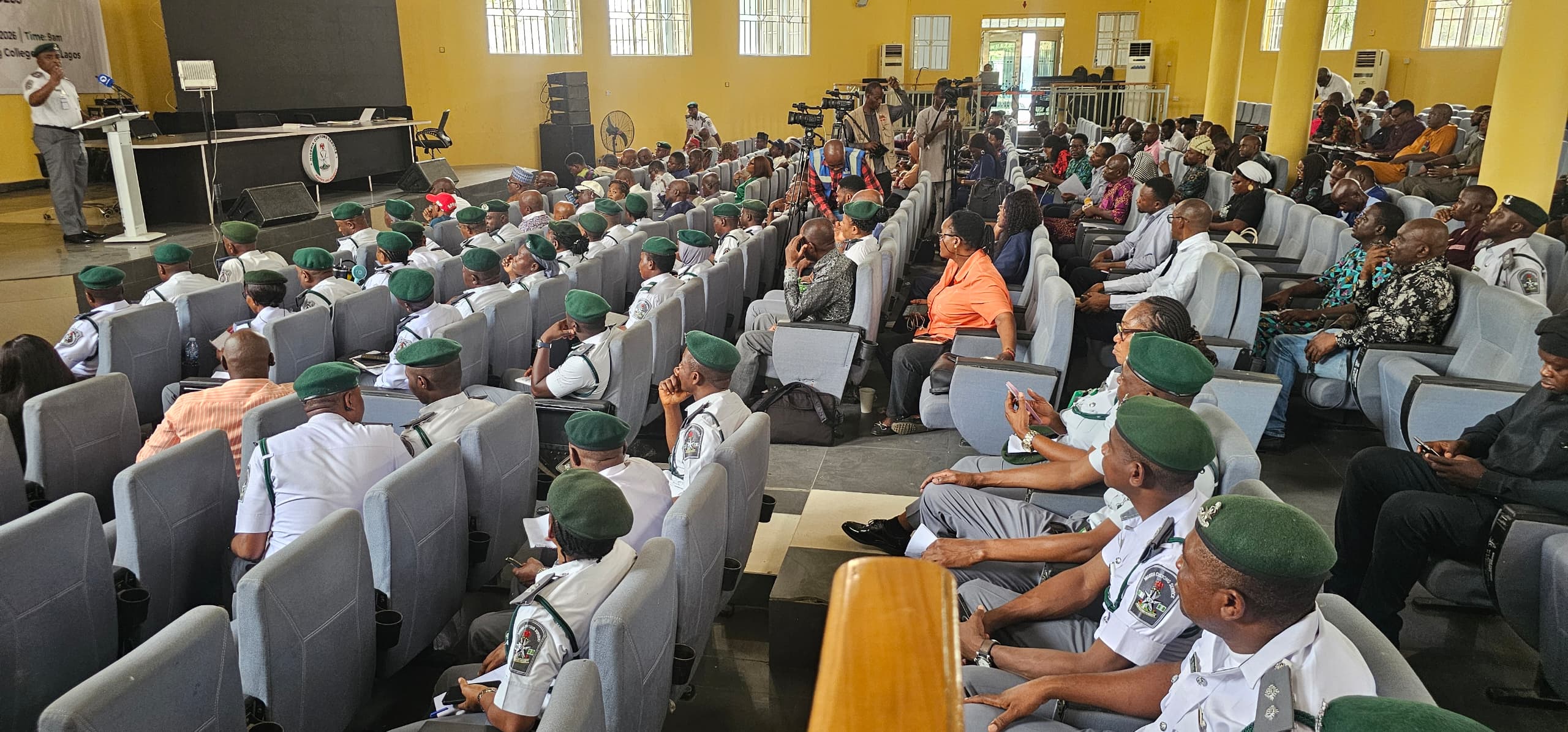
The NCS in a bid to bring as much clarity as possible to the process, Monday organised a stakeholder’s engagement training at the main hall of the Customs Training School, Ikeja Lagos.
The Nigeria Customs Service issues various types of Licenses and Permits which include:
Customs Agents Licenses
Ship Chandler Licenses
Bonded Warehouse/ Terminal Licenses
Ethyl Alcohol (Ethanol) Permit
Tobacco Permit
The head of the License and Permit Unit of the NCS is Comptroller Ngozika Anozie (PhD), she noted in her welcome address that “The automation of every process in Customs procedures is essentially keying into the global best practices. The CGC as we all know, is a father of Customs all over the world today, and as the Chairperson of WCO, he is very persistent about making Nigeria Customs Service (NCS) an epitome of Innovative excellence by all standards”.
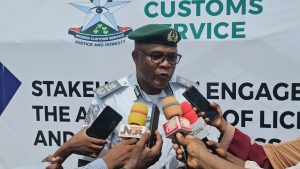 ACG Babandede fielding questions from journalists after the event.
Automation is generally seen as a means of bringing about ease of doing business in the maritime sector specifically. Again, it is also aimed at boosting the generation of the much-needed revenue for the Customs and the nation.
Comptroller Anozie listed some other benefits of automation as saving importers, clearing and forwarding agents the stress of acquiring or renewing their Licenses and Permits as they would be sitting in the comfort of their offices/homes to initiate and complete the process. Officers & men of License and Permit Unit, the bond seat unit of various Commands will also be saved some stress, as all their responsibilities would just be ‘clicks’ on the systems in front of their desks, as opposed to carrying loads of files from one table to another and from one office to the other.
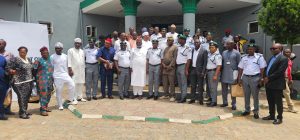 A group photograph after the event.
Automation of the processes is expected to cut costs and also minimize, if not eradicate fraudulent practices in the system.
In his keynote address the Coordinator of the Zone ‘A’ of the Nigeria Customs Service, Assistant Comptroller-General of Customs
Mohamed Babandede used the opportunity to speak a bit more about the essence of automating the processes.
Speaking about the fact that the CGC has approved the automation of the process he said “This is a direct response to the long-standing need to make our processes faster, more transparent and easier for the people we serve. For many years, Stakeholders have had to deal with paperwork, long queues, and the uncertainty that comes with manual processing”.
His words “Those days are coming to an end. This sensitisation exercise is being held across all Zones from today. The goal is simple: to make sure that every Stakeholder understands the new automated system before it is implemented”.
He stated that automation means better record keeping, easier supervision, and the ability to serve more Stakeholders at once without increasing the burden on officers. “We know that change, even when it is for the better, can feel uncomfortable at first. I want to assure you that the team here today, led by the Comptroller of the Licences and Permits Unit, will walk you through every step of the new system”.
The general overview of the process was was presented by Assistant Comptroller of Customs , Nkiruka Okoye while the step by step presentation were presented by Assistant Supretendent of Customs Abubakar Sanusi and Assistant Supretendent of Customs Ibrahim Usman of the Customs ICT department.
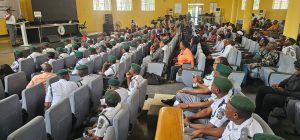 A cross section of participants at the event.
A lot of technical questions were raised by stakeholders following the presentations and much of these were answered while some questions engendered the desire by the Customs heads to work on some aspects of the software platform in other to make it more effective towards achieving its stated objectives.
At the end of the training session, ACG Babandede fielded some questions from journalists. The ACG said that “the session was greatly educative and some of the inputs will be taken to Abuja to look into, critically, then fine tune the process before commencement. From here we leave to Port Harcourt, then Kaduna and Kano for the continuation of the engagement. After the fine tuning of the process, the deployment of the automation process and moving away from the manual process will commence before the end of the year”. He concluded.
For advertisement and more information, please contact us 08027590195, 08035721540 or email us at greatalternativenigltd@gmail.com, diliutomi1@gmail.com. or send us messages on x @dn_utomi or on Instagram @utomidili